


“Lead generation”: an expression at the heart of current marketing strategies. Yet, its exact definition remains unclear for many. Between evolving digital behaviors and the rise of AI, a return to fundamentals and a focus on new acquisition practices.
It all starts with a click. A visitor views your site, lingers on a page, subscribes to your newsletter… and becomes a lead.
But this click doesn’t happen by chance. It is the content and the strategy that support it and have caused it. Behind this mechanism lies a genuine structure: lead generation is anything but random. So, what does this expression really mean?
Table des matières
What is lead generation?
Before talking about strategy, let’s discuss meaning. Generating leads is much more than collecting contacts. It is about building a relationship between a brand and its future customers. This first step of the conversion funnel demands rigor, precision, and a healthy dose of automation today.
Definition & concept: what does lead generation mean?
Lead generation involves attracting internet users interested in an offer, a service, or a product, and converting them into engaged contacts. In other words, it is the art of creating a first connection between a brand and a potential customer. A lead, or commercial contact, can be a simple filled-out form, a newsletter subscription, or downloading a white paper.
It is one of the cornerstones of digital marketing since it allows for nurturing a sustainable and targeted sales pipeline.
Difference between lead, prospect, and client: definition
These terms are often confused, yet each corresponds to a stage in the buying journey. A lead is a contact that has expressed interest. It becomes a prospect when qualified, meaning it meets certain criteria: need, budget, interest, timeframe.
The client, on the other hand, has made a purchase. Each phase requires different content and communication strategies.
Why is this step crucial in a sales funnel?
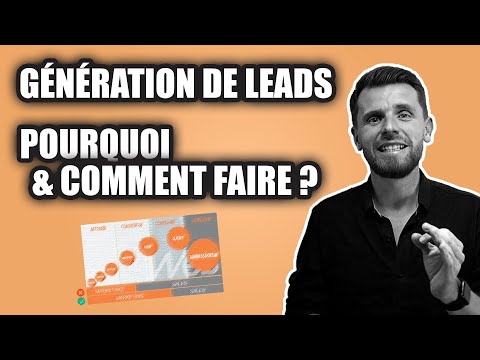
Because without leads, there are simply no clients. Lead generation is the start of the conversion funnel.
According to Hubspot, companies that excel in lead management achieve 50% more sales at a 33% reduced cost. At a time when purchasing decisions are often made online, capturing that initial attention becomes absolutely vital.
What types of leads can we generate?
Not all companies have the same goals or targets.
Therefore, their lead generation strategies must adapt according to their market, sales cycle, complexity of their offer, and the profile of their audience.
What works for a B2B startup may not necessarily be relevant for a B2C e-commerce business or a service company. This is why it is essential to understand the different types of leads that can be captured and how to qualify them effectively.
Marketing leads (MQLs) are captured through content or advertising actions. They have interacted with your brand but are not always ready to buy.
Sales leads (SQLs), on the other hand, are further along in their consideration. They are mature and ready to be contacted by a sales representative. A good strategy is to nurture the first type to feed the second.
Cold, warm, or hot leads refer to the level of maturity of a lead. A cold lead often results from a generic, little-personalized campaign. A warm lead shows moderate interest, while a hot lead is close to purchasing. The nurturing strategy aims to gradually increase this level of engagement.
Why generating leads is essential for any business ?

Successful companies rely on controlled growth based on sustainable inbound flows.
Generating leads allows for anticipating demand and structuring a continuous acquisition strategy. For a SaaS startup, for example, each lead represents a potential subscription.
For an e-commerce site, it’s the opportunity to recover an abandoned cart or to personalize an offer. According to a study by MarketingSherpa, 79% of marketing leads are never converted due to a lack of a clear follow-up strategy.
From lead generation to lead management: maintaining the connection
Once captured, a lead is only as good as its management. Scoring (the rating assigned based on behavior) and CRM tools allow for tailored follow-ups. AI automation plays a key role here.
By finely segmenting profiles, it helps to send the right message at the right time. Lead management thus ensures the profitability of acquisition efforts.
How to generate leads today? Classic methods and innovative tools
The evolution of tools has created new possibilities. Yet, the foundations remain the same: content, visibility, relationships.
Content as lever number one
Content remains the most reliable weapon for generating leads. A well-optimized blog article, a downloadable practical guide, or a regular newsletter builds a relationship of trust.
Content marketing costs 62% less than traditional marketing and generates three times more leads, according to Demand Metric, the North American expert in marketing strategy.
Advertising and SEO
SEA, SEO, GEO, and netlinking provide immediate or gradual exposure. Geolocalized campaigns target specific segments accurately. Combined with an AI strategy such as A/B testing or behavioral segmentation, these levers become fearfully effective.
Intelligently combined, paid advertising and organic search form a powerful strategic duo. While SEA captures immediate attention through targeted campaigns, SEO ensures lasting visibility through optimized content. Netlinking enhances the site’s authority, highlighting its legitimacy in the eyes of search engines.
New AI approaches such as GEO models (Generative Experience Optimization) also allow for dynamic content adjustment based on search intentions. Thanks to advanced semantic analysis and automated variant testing, they refine positioning in AI results and promote the generation of qualified leads from organic traffic.
Building a media brand: the cornerstone of a long-term content strategy

Building an online media allows for attracting an audience base built around a constant and targeted content distribution. This strategy positions your company as a reference on a given subject. It strengthens credibility, loyalty, and SEO. Platforms like Inbound.org or Think with Google illustrate this approach well.
Automating lead generation with marketing AI
AI tools like Hubspot AI or ChatGPT enable the creation of intelligent workflows: conversational chatbots, personalized recommendations, or predictive scoring.
A newsletter powered by AI adapts its topics according to each reader’s interest. According to an analysis by Salesforce, 67% of decision-makers believe that AI significantly improves commercial performance.
How does artificial intelligence revolutionize lead management?

If artificial intelligence is now entering all spheres of digital marketing, it is particularly in lead management that it deploys its most strategic potential.
Thanks to powerful algorithms, it redefines the ways to qualify, prioritize, and nurture qualified contacts to maximize every conversion opportunity.
AI for sorting, scoring, and prioritizing your leads
It all starts with a better understanding of data. Artificial intelligence can analyze visitor behavior on a site or application in real-time and deduce a level of interest or purchase intent.
This intelligent lead scoring relies on behavioral criteria (time spent on a page, clicks on certain content, email open rates, etc.), which will be cross-referenced with sociodemographic data or purchase history.
This fine analysis allows for ranking leads according to their potential, focusing commercial efforts on those with the highest chances of converting.
AI thus facilitates prioritization, while reducing manual processing time. Solutions like Salesforce Einstein, Zoho CRM, or Adobe Sensei already offer these automated and scalable scoring capabilities.
The predictive approach is not limited to analyzing the past. It also allows for anticipating future behavior of a lead based on similar profiles or engagement patterns. This helps teams take the right action at the right time with the right person.
AI for enhancing nurturing and conversion
Once sorting is done, AI steps in to maintain the relationship with leads: nurturing. It enables the creation of personalized content sequences based on interests, maturity levels, or previous interactions. The goal is to keep the contact engaged without overwhelming them.
Tools like ActiveCampaign, Brevo, or Hubspot AI can automatically trigger emails, notifications, or specific contents based on detected behaviors. A newsletter can thus change its subject or tone depending on whether the reader is a decision-maker, a curious person, or a buyer in consideration.
Some platforms also integrate real-time personalization modules. A visitor identified as a hot lead will not see the same version of your site as a mere subscriber. This responsiveness increases the chances of conversion while optimizing user experience.
Finally, AI allows for measuring the effectiveness of nurturing actions, with intelligent dashboards that detect the most effective paths. Iteration then becomes continuous: AI learns, adjusts, and refines the strategy over time.
In summary, artificial intelligence brings to lead management a finesse and reactivity that were previously inaccessible. By automating sorting, refining qualification, and adapting messages, it transforms what was once a cumbersome process into an agile and effective lever. A discreet yet decisive revolution in the way future clients are engaged.

